
A recent survey in Chà Nòi–Khe Gát documented an unnamed sinkhole estimated at 100–120 metres deep—still a protected landscape, not a visitor attraction.
Deep beneath the forest canopy of Phong Nha–Kẻ Bàng, a newly surveyed sinkhole has added another striking question to the region’s limestone landscape. Preliminary measurements place it among the area’s larger collapses, while a thriving patch of forest at its base gives the formation an unexpected, almost hidden-world quality. The findings are intriguing, but the site remains an active subject of research and conservation.
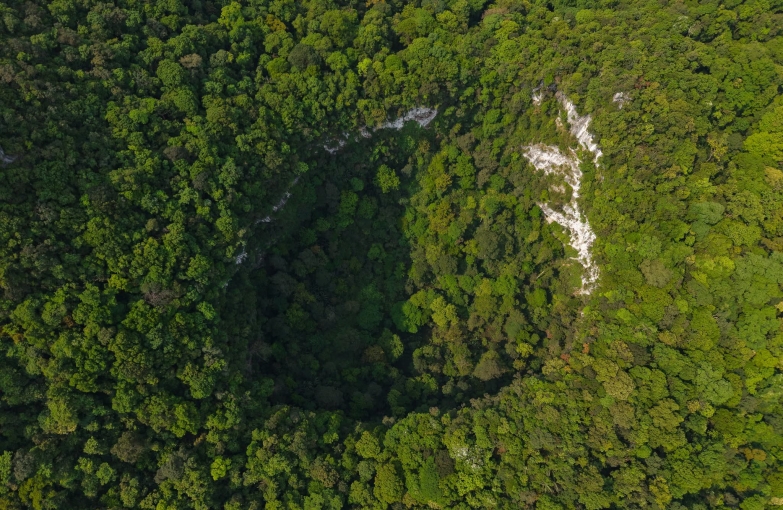
A remarkable formation in the karst forest
The unnamed sinkhole lies in the Chà Nòi–Khe Gát area of Phong Nha–Kẻ Bàng National Park. Survey teams estimate an opening about 190 metres by 140 metres, an area of roughly 2.18 hectares and a depth in the range of 100–120 metres. These are field estimates rather than a final geological record, and the interior’s shape makes its scale difficult to capture in a single measurement.
In a limestone landscape, water can gradually widen cracks and cavities underground. If the rock above loses support, it may collapse and leave a deep opening. That is a useful way to understand sinkholes in general; the exact formation history and any hidden passages at Chà Nòi–Khe Gát still require further study.
From a satellite clue to a difficult field survey
The first clue came from satellite imagery. Cave specialist Kevin Ditamore noticed an unusual shape in the forest, and later drone checks helped the team identify where a closer survey might be possible. A 24-member group—including specialists from the U.S.-based National Speleological Society, Jungle Boss team members and park personnel—worked in the area from 23 to 28 July 2025, negotiating steep terrain and near-vertical rock walls.
The overview map helps place the survey area within the vast protected forest, but it is not a route for visitors. The Phong Nha Discovery Tours report and the Phong Nha–Kẻ Bàng National Park Management Board’s survey notice both describe the work as a specialist exploration, not a public tour. The park report credits the overview photograph to ranger Trần Xuân Mùi and interior images to Jungle Boss.
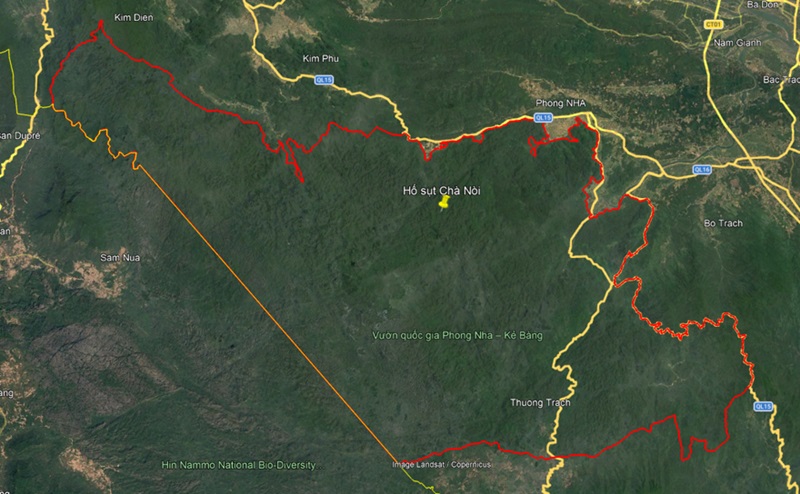
A green pocket beneath the cliffs
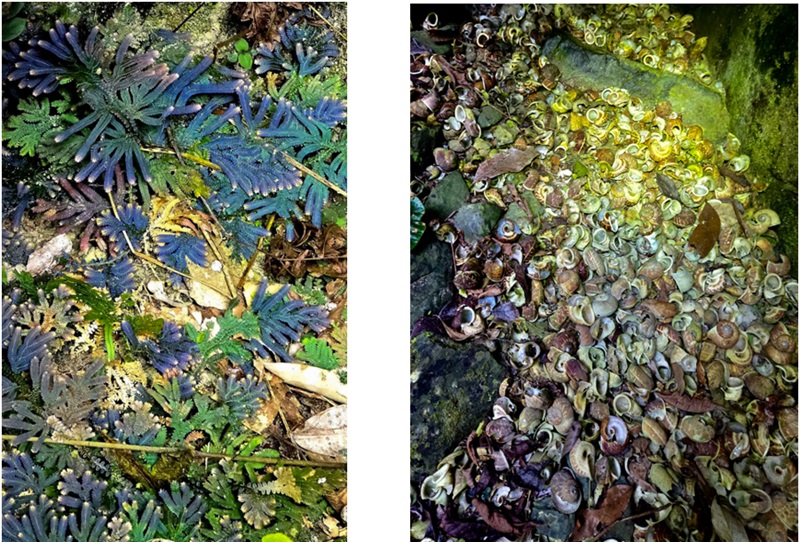
One of the survey’s most evocative observations is the vegetation below the steep walls: trees and smaller plants have taken root among the rock and debris. The team also noted signs of wildlife, shells and traces that may be associated with mineral formations. These are preliminary observations, not a complete inventory of the sinkhole’s biodiversity or geological features.
No accessible cave entrance or clear underground stream was confirmed during the survey. A fissure was observed in the rock, but what may lie beyond it remains uncertain. The questions still open—about water, cavities and the life sheltered below—are part of what makes the site scientifically valuable.
Why this discovery calls for care
Chà Nòi–Khe Gát sits in a strictly protected area of the national park and has no visitor trail. Its steep walls, unstable rock and sensitive habitat make an independent approach unsafe and inappropriate. Please do not use survey imagery as directions or attempt to enter the area; access belongs to authorized researchers and park teams.
Travelers can still experience Phong Nha’s remarkable underground world through established visitor sites and permitted itineraries. For a more accessible introduction to the region’s caves, explore this Phong Nha and Paradise Cave guide. The new sinkhole is a reminder that some of the park’s most compelling stories are best approached through careful research—and respect for the forest that keeps them.
 Contact us via Whatsapp
 Contact us via Messenger