
Mother Suot Monument Dong Hoi: A Monumental Tribute Along the Nhat Le River
Standing gracefully on the banks of the Nhat Le River, the Mother Suot Monument is much more than a striking monolithic stone sculpture. It serves as an enduring spiritual anchor and a living reminder of the heroic resilience displayed during the Vietnam War. Set against the breezy riverside park in Dong Hoi Ward, this magnificent memorial honors the courage, silent sacrifice, and unbreakable spirit of Vietnamese women in wartime.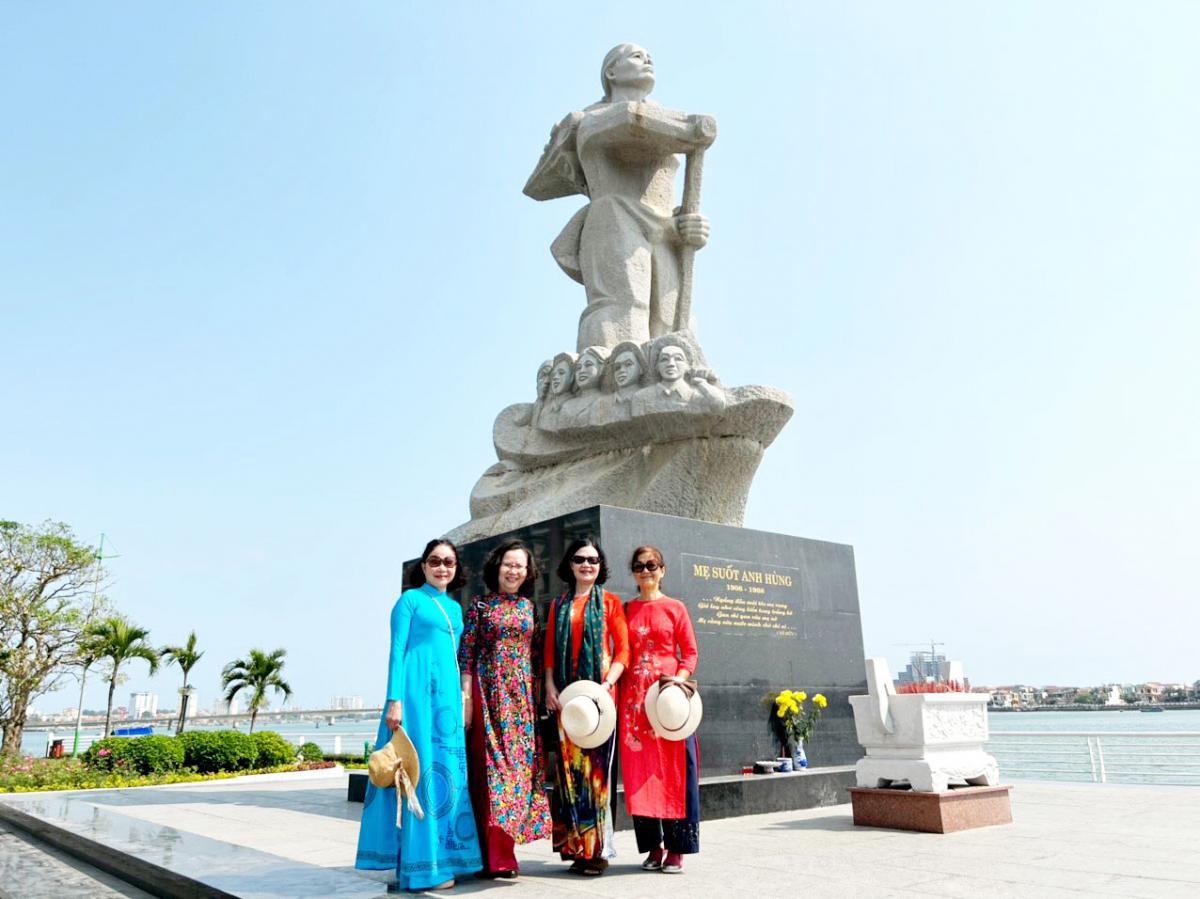
The Legend of the 60-Year-Old Ferrywoman in the "Fire Zone"
Mother Suot (born Nguyen Thi Suot, 1906–1968) grew up in a impoverished working-class family in the fishing village of Bao Ninh. From an early age, her life was tied to the water, making a modest living transporting locals across the Nhat Le River.
When airstrikes intensified in North Vietnam between 1964 and 1968, the Nhat Le ferry crossing became a critical logistical choke point—and consequently, a heavily targeted zone. At 60 years old, an age when most would seek rest, Mother Suot volunteered for the dangerous mission of ferrying soldiers, wounded personnel, and military supplies across the river.
Braving heavy bombardment, turbulent waters, and constant danger, she fearlessly completed over 1,400 safe ferry crossings. The image of a silver-haired, humble mother skillfully rowing through the fierce waves became an iconic symbol of patriotism, inspiring celebrated literary works like To Huu's famous poem "Me Suot". In 1967, she was awarded the prestigious title of Hero of the People's Armed Forces. On October 13, 1968, Mother Suot sacrificed her life during an enemy airstrike right by her beloved riverbank, leaving behind a legacy cherished by the entire nation.
Sculptural Language & Monolithic Granite Artistry
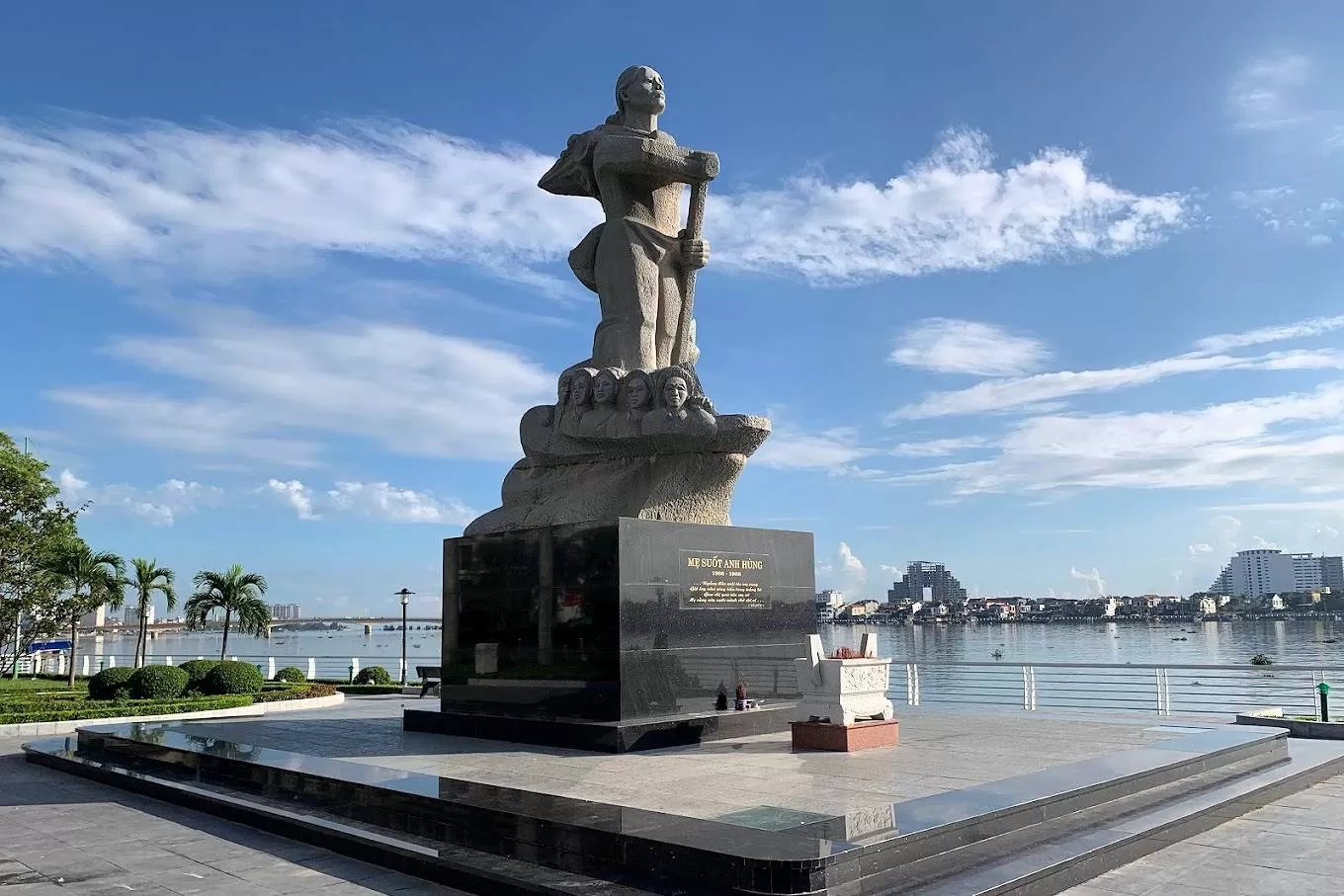
Unveiled in 2003 and sculpted by renowned artist Phan Dinh Tien, the Mother Suot Monument stands as a masterpiece of modern public art infused with deep national soul.
Strength in Granite: Standing 7 meters tall, the statue was meticulously carved from massive blocks of dark gray granite. The chiseled, angular texture gives it a timeless, steadfast presence against the elements.
Dynamic Posture: Mother Suot is depicted in a powerful, forward-moving stance: her head held high with pride, one hand firmly gripping the oar—the tool that defined her life's purpose. Her wind-swept ao dai flowing backward captures both the fierce coastal winds of Central Vietnam and her unyielding determination.
The Historic Relief Base: Encircling the pedestal is a detailed bas-relief illustrating the people of the region during wartime: armed soldiers, youth volunteers, and local villagers working and fighting side by side.
Spiritual Connection to Space: Positioned facing directly toward the Nhat Le River and overlooking the historic Bao Ninh ferry crossing, the monument creates a poignant spatial bridge connecting heroic history with peaceful present days.
Experiencing the Monument & Its Surrounding Atmosphere
Visiting the Mother Suot Monument offers more than a history lesson; it provides an authentic glimpse into the daily life and charm of Dong Hoi:
The Riverside Heritage Trail
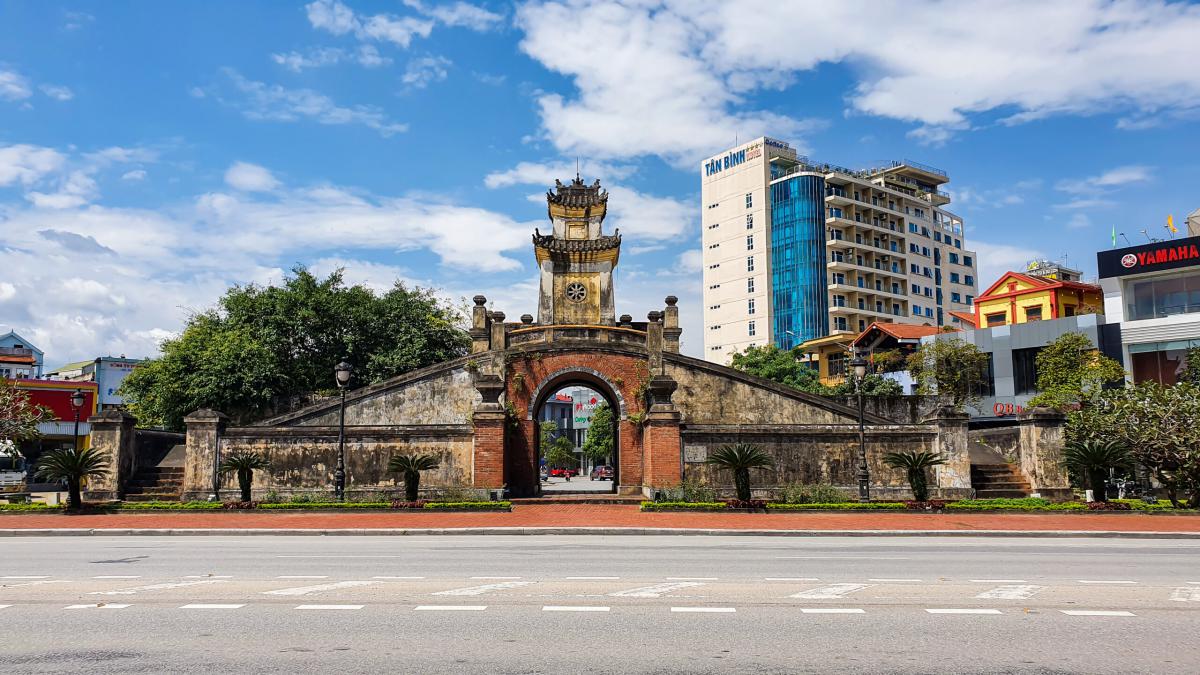
Located along the scenic riverfront promenade, the monument pairs seamlessly with other historic landmarks in the immediate area:
Bao Ninh Ferry Crossing: The actual historic site where Mother Suot navigated her boat.
Quang Binh Gate (Quang Binh Quan): An ancient Citadel gate reflecting Nguyen Dynasty military architecture.
Tam Toa Church Ruins: A silent, preserved ruin serving as a poignant reminder of wartime history.
A Vibrant Local Gathering Spot
In the early mornings and late afternoons, the surrounding park transforms into a lively community space. Locals gather here to exercise, walk along the river, and catch fresh breezes from the sea, giving travelers an authentic taste of local coastal life.
Sunset & Evening Illumination
As dusk falls, the setting sun paints the Nhat Le River in brilliant golden hues, creating a dramatic backdrop behind the monument. At night, warm architectural lighting highlights the sculpted contours of the granite, casting beautiful reflections across the water alongside the brightly lit Bao Ninh Bridge.
Essential Visitor Guide
Location: Quach Xuan Tien Street (Nhat Le Riverbank), Dong Hoi Ward, Quang Tri Province.
Opening Hours: Open 24/7.
Admission: Free.
Best Time to Visit: 4:30 PM to 7:30 PM to catch both the sunset over the river and the monument illuminated at dusk.
 Contact us via Whatsapp
  Contact us via Messenger